
Overbite Correction
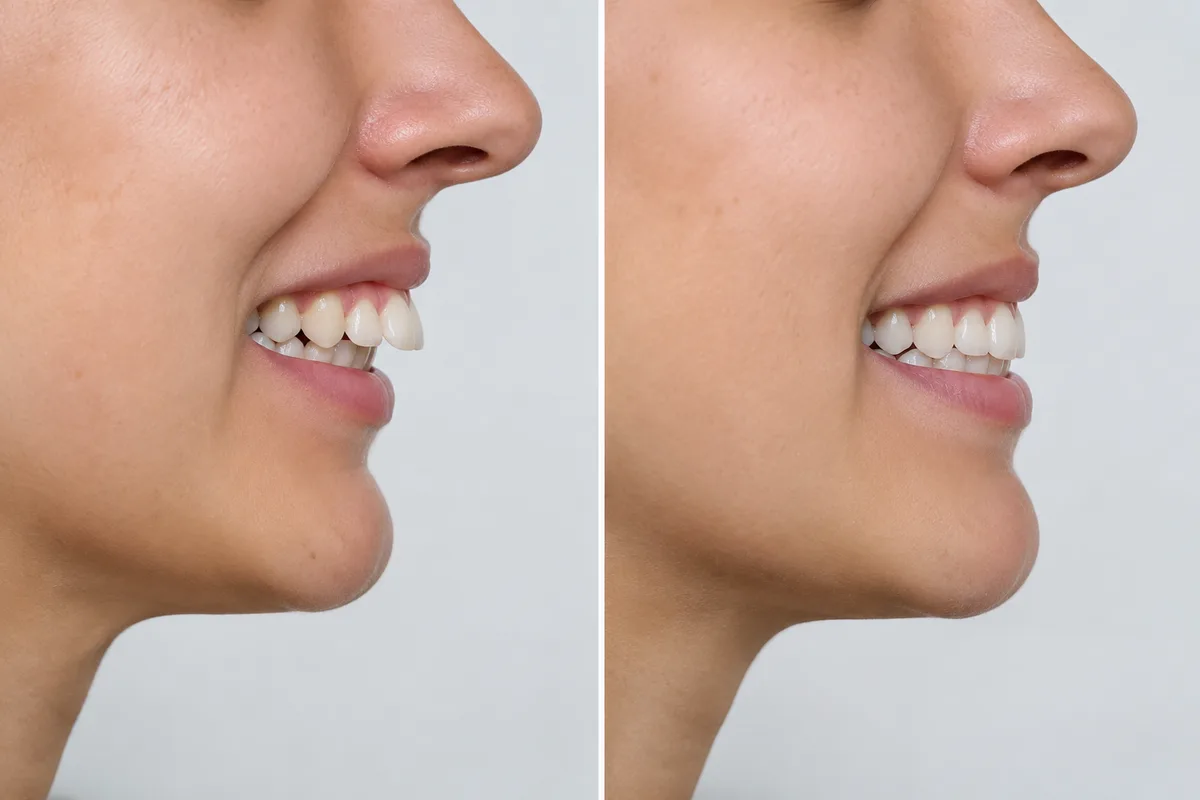
Overbite Correction
An overbite occurs when the upper front teeth extend too far over the lower teeth. Some overlap is normal, but a pronounced overbite can affect how the teeth meet, how the jaw functions, and how the smile looks. Overbite correction is a common reason families and adults seek orthodontic care, and treatment is typically planned around a patient's age, jaw growth, and the severity of the bite.
How Overbites Are Evaluated
Dr. Aesha Chaudhry, an orthodontist and board-certified pediatric dentist, evaluates the teeth, jaw position, and facial profile to understand what is driving the overbite before recommending a treatment path.
- Digital Dental X-Rays — give a detailed view of developing teeth and roots.
- Panoramic X-Rays — capture the whole mouth, including the jaw joints, in one scan.
- Cephalometric X-Rays — measure how the jaws and facial bones relate to each other.
- Digital Intraoral Scanning — creates a precise 3D model of the teeth for planning.
Treatment Options
- Headgear — guides jaw growth in younger patients to correct how the upper and lower teeth meet.
- Palatal Expanders — widen a narrow upper jaw to create room and support proper bite alignment.
- Traditional Metal Braces or Champagne-Colored Braces — move teeth into a corrected position over time.
- Invisalign Clear Aligners or Overbite Correction — a removable option for some overbite cases.
- Phase 1 Orthodontic Treatment — addresses bite issues early, while the jaw is still growing.