
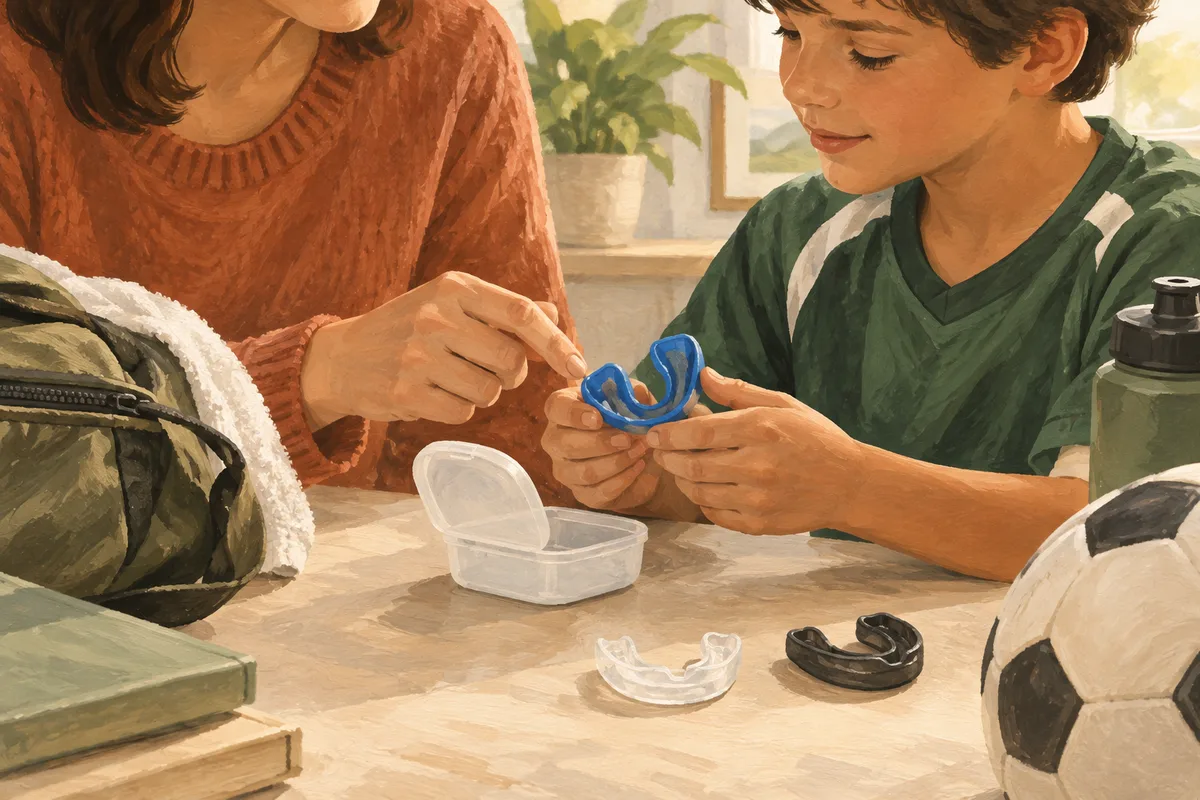
Choosing a Sports Mouthguard for a Growing Smile
A sports mouthguard may look like a simple piece of equipment, but choosing one gets more complicated when a child’s smile is still growing. Baby teeth loosen, adult teeth come in, and braces move teeth into new positions. A guard that fits well at the start of a season may not fit the same way a few months later.
The goal is to find a mouthguard that suits the sport, stays in place comfortably, and leaves room for normal breathing and communication. Knowing the differences between mouthguard options can help families make a thoughtful choice—and recognize when it is time to check the fit again.
Comparing the Main Mouthguard Options
Stock mouthguards come ready to wear, with little or no adjustment. They can be convenient, but their fixed shape may feel bulky or loose. If a child has to keep biting down to hold a guard in place, it may interfere with speaking and breathing during play.
Boil-and-bite mouthguards soften in hot water and are shaped around the teeth according to the manufacturer’s directions. This allows more adjustment than a stock guard, but the result depends on the product and how it is fitted. Uneven shaping or excessive thinning can affect how the guard sits and protects the teeth.
Custom-made mouthguards are made by a dental professional using an impression or scan of the teeth. They are shaped for an individual mouth rather than a general size. Still, a custom fit does not last forever in a growing child, and tooth movement may mean the guard needs adjustment or replacement.
The right choice is not simply the one labeled for a certain age. A child’s teeth, stage of growth, orthodontic appliances, and sport all matter. Product labels can help, but they do not replace guidance about individual fit.
How Braces and Changing Teeth Affect Fit
Braces add another factor: a mouthguard needs to accommodate brackets and wires as well as moving teeth. Some guards are designed specifically for braces, with space around the appliances. A standard guard that molds tightly around the teeth may become too snug as orthodontic treatment progresses.
Growing smiles can change even without braces. A guard may press on an erupting tooth, feel different after a baby tooth falls out, or stop seating properly as the dental arch develops. Age alone cannot tell a family whether a guard still fits.
Children and teens receiving orthodontic or pediatric dental care at Crystal Clear Orthodontics & Pediatric Dentistry in Wilmington, Delaware, can call with personal questions about mouthguard fit as their teeth change. Families should also ask their orthodontic provider how removable clear aligners and other appliances should be handled during sports rather than assuming an aligner serves as a mouthguard.
What a Comfortable Fit Should Feel Like
A well-fitting guard should stay in place without constant clenching. It should not dig into the gums, rub against soft tissue, or cause pain. Breathing and speaking should remain manageable, and the guard should not feel as though it could easily slip out.
Fit deserves attention at practices as well as games. Children may be reluctant to mention discomfort, especially if they think it means missing play. Asking whether the guard feels tight, loose, or bulky can make it easier for them to explain a problem.
Sport requirements matter, too. Families should check team or league rules and make sure the guard is intended for the activity. A helmet or face shield does not automatically remove the need for mouth protection.
When to Replace a Mouthguard
There is no single replacement schedule that works for every growing smile. Check the guard regularly and whenever teeth or orthodontic appliances change. Cracks, tears, deep chew marks, sharp edges, or a shape that no longer fits are reasons to reassess it.
A guard also needs attention if it becomes loose, presses on a tooth, or no longer seats easily. Avoid forcing it into place or cutting it to make room around braces without professional guidance. After a strong impact, look for damage even if the guard still seems usable.
Good care helps keep a guard clean and easier to inspect. Follow its cleaning instructions, let it dry, and store it in a ventilated case away from heat. Bringing it to dental or orthodontic visits gives families a chance to ask about fit before the next practice or game.
Questions about your own care? The team at Crystal Clear Orthodontics & Pediatric Dentistry is happy to help — call us at (302) 412-9646 or request an appointment.
This content is for general information only and isn't dental or medical advice. Talk with your dentist or orthodontist about your own situation. If you have a medical emergency, call 911.