
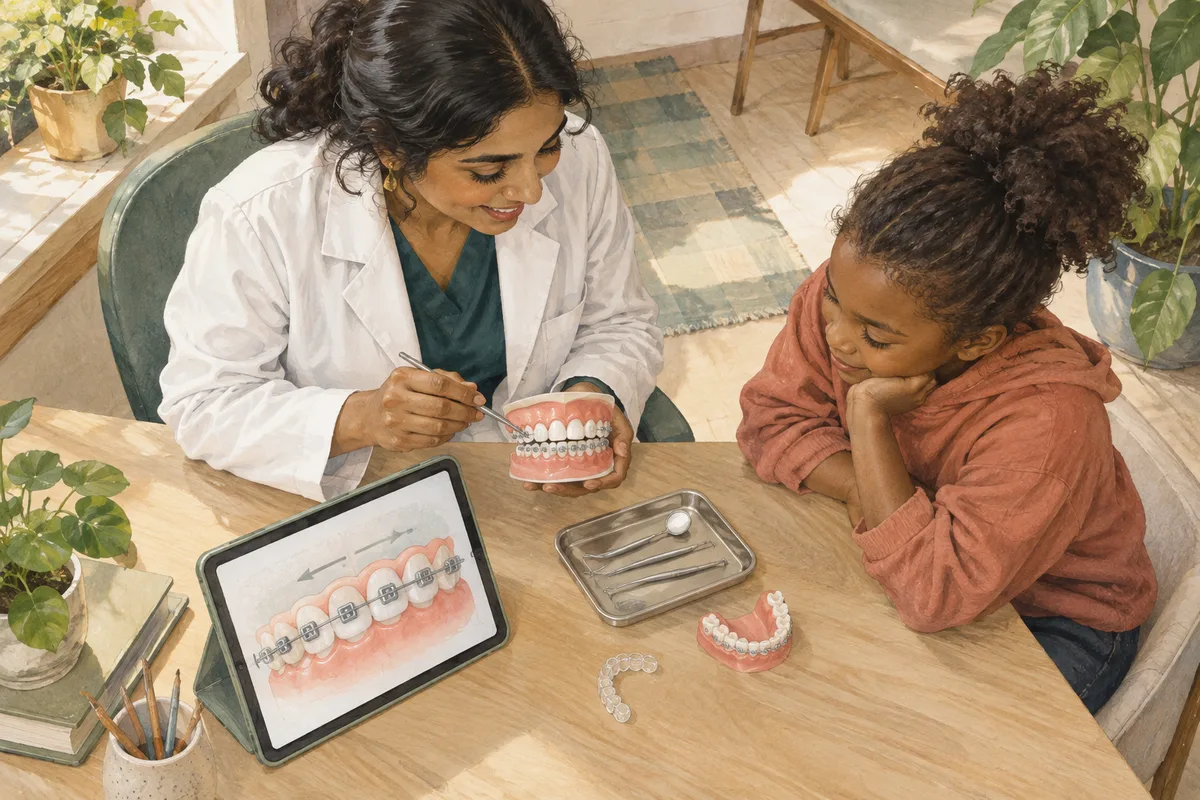
How Braces Actually Move Teeth
Have you ever wondered what is actually happening inside your mouth while you wear braces? It can seem like a bit of magic watching crooked teeth slowly line up over time, but the process is really rooted in biology. Understanding how braces work can help you feel more confident and patient throughout your treatment.
At Crystal Clear Orthodontics & Pediatric Dentistry in Wilmington, DE, we like our patients to understand what is happening with their smile at every stage. Whether you or your child are wearing traditional metal braces, clear braces, or exploring options like Invisalign, the basic science behind tooth movement stays the same.
Teeth Are Not as Fixed as They Seem
It might feel like your teeth are firmly locked in place, but they actually sit inside a flexible network of tissue and bone called the periodontal ligament. This ligament acts like a cushion between the tooth root and the surrounding bone, allowing for tiny amounts of movement.
When gentle, consistent pressure is applied to a tooth, the ligament on one side gets compressed while the ligament on the other side stretches. This signals the body to respond. Bone cells on the compressed side slowly break down and clear away, while bone cells on the stretched side build new bone to fill in the space. Over time, this back and forth process allows the tooth to shift into a new position.
How Brackets and Wires Create Movement
Traditional metal braces, clear braces, and champagne colored braces all use the same basic idea. Small brackets are attached to each tooth, and a wire connects them together. The wire is shaped to guide teeth toward their ideal position, and it applies steady, light force to individual teeth or groups of teeth.
As the teeth respond to that pressure and begin shifting, your orthodontist adjusts the wire during regular visits. These small adjustments keep the movement going in the right direction as the teeth settle into their updated positions.
Clear aligner options, including Invisalign and Angel Aligners, work a little differently on the outside but rely on the same biological process on the inside. Instead of brackets and wires, a series of custom trays gradually shift teeth by applying pressure in planned stages. Each new set of aligners nudges the teeth a small step closer to their final position.
Why Slow and Steady Wins the Process
It can be tempting to wish teeth would move faster, but the body needs time to safely rebuild bone around a shifting tooth. If a tooth moved too quickly, it could put unnecessary stress on the root and surrounding structures. That is why orthodontic treatment happens gradually, with small adjustments over weeks and months rather than all at once.
This gradual pace also gives the gum tissue and supporting structures time to adapt, which helps keep the whole mouth healthy throughout treatment. Every mouth is different, so timelines can vary quite a bit from one patient to another depending on individual needs.
Choosing the Right Approach for You
Because everyone's smile is different, there is no single right way to move every tooth. Some patients benefit from traditional metal braces, which offer a reliable way to manage more complex movements. Others prefer the look of clear braces or champagne colored braces, which blend in more with the natural tooth color while still relying on the same bracket and wire system.
For patients who want a more discreet option, Invisalign and Angel Aligners provide a removable, tray based approach. Younger patients may also begin with Phase 1 orthodontic treatment, which addresses certain issues early while the jaw is still developing, often before all the adult teeth have come in.
Whatever approach fits your situation, digital dental x-rays and digital intraoral scanning help our team get a clear picture of your teeth and jaw before creating a treatment plan. This technology allows for detailed planning without relying on guesswork.
Keeping Teeth in Their New Positions
Once teeth have moved into their updated positions, the bone and ligament tissue around them need time to fully settle. This is why orthodontic retainers play such an important role after braces or aligner treatment ends. Retainers help hold teeth in place while the surrounding bone finishes remodeling around their new positions.
Understanding this final step can help you appreciate why wearing a retainer as directed matters, even after the visible part of your treatment is complete.
If you have questions about how braces or aligners might work for your own smile, our team at Crystal Clear Orthodontics & Pediatric Dentistry in Wilmington, DE is happy to talk through your options. Every mouth tells a different story, and we welcome the chance to answer your questions and help you understand what your treatment journey might look like.
Questions about your own care? The team at Crystal Clear Orthodontics & Pediatric Dentistry is happy to help — call us at (302) 412-9646 or request an appointment.
This article is for general information only and is not medical advice.