
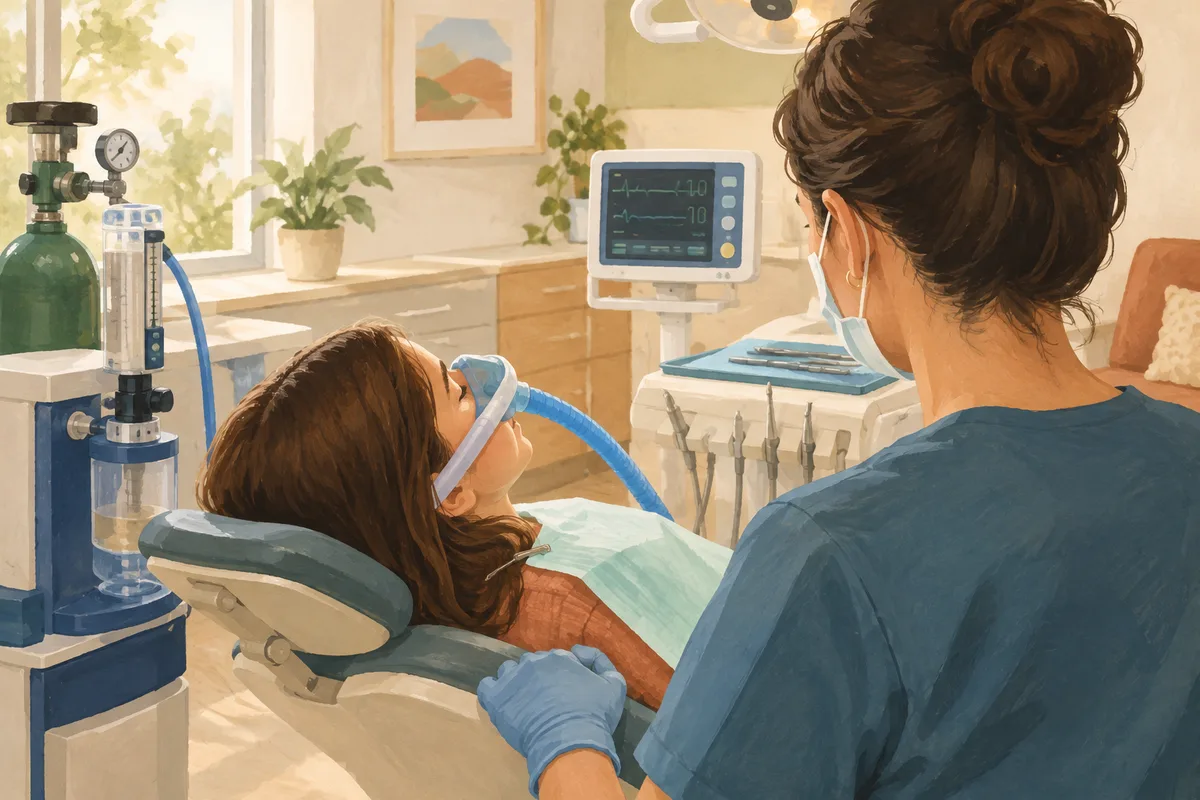
Laughing Gas, Sedation, and Hospital Care: Understanding the Differences
When your child needs dental treatment, terms like laughing gas, sedation, and hospital care can be hard to sort out. They don’t all describe the same thing. Laughing gas is one way to help a child relax. Sedation can range from mild relaxation to a much sleepier state. Hospital care describes where treatment happens, not how deeply a child is sedated.
The right approach depends on more than how nervous a child feels. Their health history, the amount of dental work they need, and how well they can stay still all matter. A useful starting question is: How awake will my child be, and what support will they need during and after treatment?
Laughing gas: Relaxed but awake
Laughing gas, also called nitrous oxide, is breathed through a small mask over the nose. When used on its own for mild sedation, it can help a child relax while they stay awake and able to answer questions. It may be helpful for a child who feels uneasy but can keep the mask on and breathe through their nose. A stuffy nose can make that harder.
The effects generally wear off quickly once the gas is stopped. Laughing gas helps with relaxation, but it does not replace a numbing medicine when one is needed. If laughing gas is combined with another sedating medicine, the level of sedation and the recovery plan can be different.
Moderate sedation, deep sedation, and general anesthesia
With moderate sedation, a child may be sleepy but can still respond on purpose to a voice or gentle touch. With deep sedation, they are harder to wake and may need help keeping their airway open or breathing. Under general anesthesia, a child is unconscious and does not respond during treatment. Their breathing often needs support.
A hospital is one setting where dental treatment under general anesthesia may take place. A hospital setting may be considered when a child’s medical needs call for additional support or when the treatment plan requires resources available there. Needing care in a hospital does not necessarily mean the dental problem itself is more serious.
How health history and dental needs shape the plan
The same dental procedure can call for different approaches in different children. A child who can sit through a short visit may need less support than one who needs several teeth treated or has trouble staying still. Age, past dental experiences, and how well a child can follow directions also help the dental team weigh the options. Sedation is not always needed.
Health details matter even if they seem unrelated to teeth. Asthma, loud snoring or sleep apnea, a recent cold, current medicines, and past reactions to sedation or anesthesia can all affect the plan. Sharing this information helps the team decide whether to adjust the approach, choose a different setting, or postpone treatment.
What monitoring and recovery look like
Monitoring changes with the level of sedation. With mild sedation, the team watches how the child responds and breathes. Deeper sedation and general anesthesia require more intensive monitoring, including checks of breathing, oxygen levels, and heart rate. Before treatment, it’s reasonable to ask who will monitor your child and what signs the team will look for before your child can go home.
Recovery after laughing gas alone is generally brief. After deeper sedation or general anesthesia, children need more time to wake up and may be sleepy or unsteady afterward. Eating and drinking instructions before treatment and supervision needs afterward depend on the plan. If you have questions about your child’s health history or what to expect from a pediatric dental visit, you can call Crystal Clear Orthodontics & Pediatric Dentistry in Wilmington, Delaware, to talk them through.
Questions about your own care? The team at Crystal Clear Orthodontics & Pediatric Dentistry is happy to help — call us at (302) 412-9646 or request an appointment.
This content is for general information only and isn't dental or medical advice. Talk with your dentist or orthodontist about your own situation. If you have a medical emergency, call 911.