
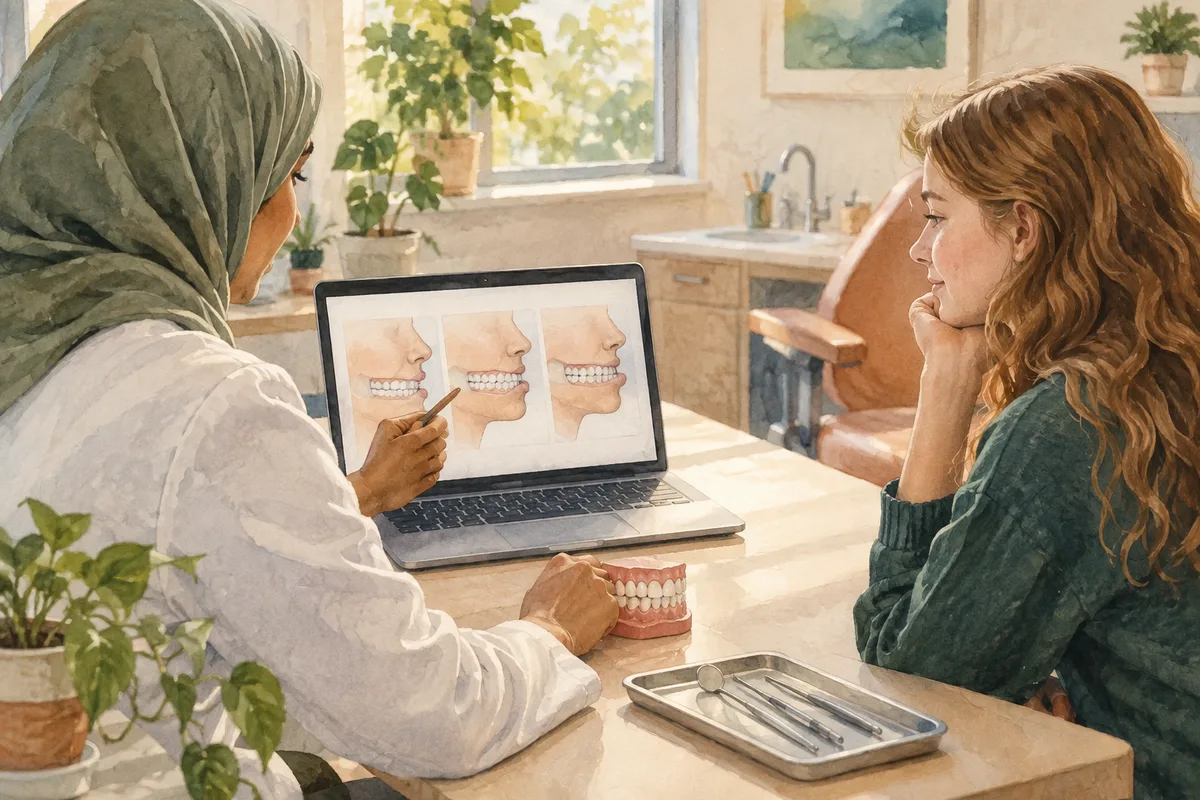
Overbite, Underbite, Crossbite: What Bite Problems Really Mean
If a dentist or orthodontist has ever mentioned that you or your child has an overbite, underbite, or crossbite, you might have nodded along without fully understanding what it means. These terms get used a lot, but they can be confusing if no one takes the time to explain them.
At Crystal Clear Orthodontics & Pediatric Dentistry in Wilmington, DE, we talk with patients and parents about bite alignment every day. Understanding these common terms can help you feel more confident during appointments and better prepared to ask questions about your own smile.
What Does 'Bite' Actually Mean?
Your bite refers to how your upper and lower teeth fit together when your mouth is closed. Ideally, the top teeth should sit slightly in front of the bottom teeth, and the points of the molars should fit neatly into the grooves of the opposite teeth. When this alignment is off in some way, it is usually described using one of a handful of common terms.
Bite problems can happen for many reasons, including the size and shape of the jaw, the size of the teeth, genetics, or habits like thumb sucking during childhood. Some bite issues are barely noticeable, while others can affect chewing, speech, or the way the face looks over time.
It is worth remembering that every mouth is different, and the way a bite issue shows up in one person may look completely different in another. That is why a personal evaluation matters more than trying to self-diagnose based on general descriptions.
Overbite: When the Top Teeth Sit Too Far Forward
An overbite happens when the upper front teeth extend too far over the lower front teeth. A small amount of overlap is normal, but when the gap becomes more pronounced, it is considered a bite issue worth addressing.
Overbites are one of the more common bite concerns we see, and they can range from mild to more noticeable. Depending on the situation, an overbite might be managed with options such as traditional metal braces, clear braces, or Invisalign, chosen based on what fits the patient's needs and age.
Underbite: When the Lower Jaw Leads
An underbite is essentially the opposite of an overbite. Here, the lower front teeth sit in front of the upper front teeth when the mouth is closed. This can happen because of how the jawbone develops, and it is often noticeable even from the side profile.
Underbites can sometimes affect how comfortably a person chews or speaks. Because the jaw itself may be involved, treatment plans are often built around the individual's growth and development, which is one reason early evaluations through Phase 1 Orthodontic Treatment can be so helpful for children.
Crossbite: When Teeth Don't Line Up Side to Side
A crossbite occurs when one or more upper teeth sit inside the lower teeth instead of outside them, which is the usual arrangement. This can happen on just one side of the mouth or on both sides, and it can involve the front teeth, the back teeth, or a combination.
Crossbites are sometimes harder to notice just by looking in the mirror, especially if only a few teeth are affected. They are often picked up during a routine dental or orthodontic exam, which is one more reason regular checkups matter, even when nothing seems obviously wrong.
How Bite Issues Are Identified and Managed
Figuring out the exact nature of a bite problem usually starts with a hands-on exam, along with tools like digital dental X-rays and digital intraoral scanning. These tools give a clear picture of how the teeth and jaws relate to each other, which helps guide the right approach for each patient.
Because every mouth is different, treatment options can vary quite a bit. Some patients do well with traditional metal braces, while others prefer clear braces or champagne-colored braces for a more subtle look. Younger children may benefit from early evaluation through family orthodontics or Phase 1 treatment, while adults exploring their options might ask about Invisalign or Angel Aligners. After treatment, orthodontic retainers help maintain the new alignment.
There is no single right answer for every bite concern, and that is exactly why a personal conversation with your orthodontist matters so much. What works well for one person's overbite may not be the right fit for someone else's.
If you have noticed changes in your bite, or you simply have questions about what a diagnosis means for you or your child, we encourage you to give our Wilmington office a call. Our team is happy to talk through your specific situation and help you understand what your options might look like.
Questions about your own care? The team at Crystal Clear Orthodontics & Pediatric Dentistry is happy to help — call us at (302) 412-9646 or request an appointment.
This article is for general information only and is not medical advice.